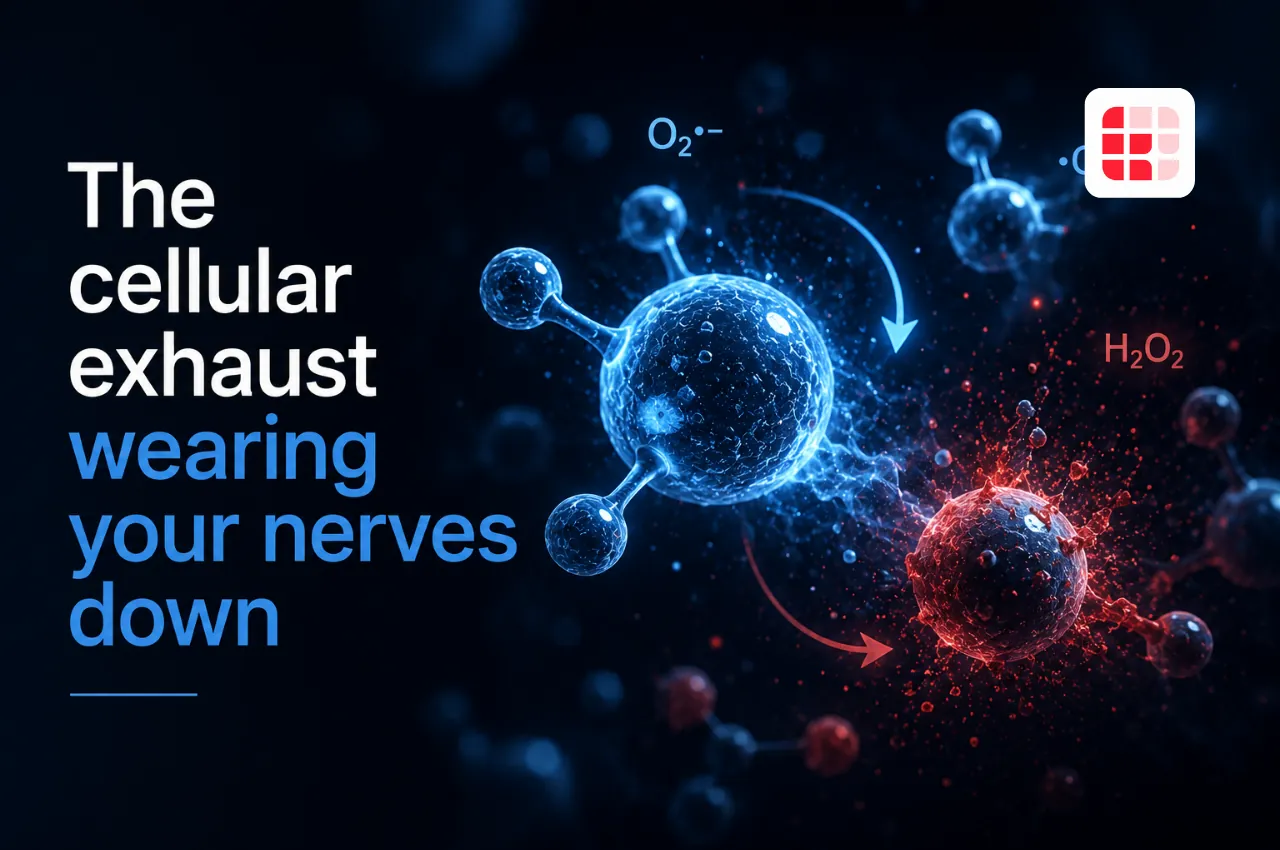
Molecular illustration of redox balance
The cost of making energy
Every cell that produces energy also produces reactive oxygen species, unstable molecules that can damage cellular components if they accumulate. Your body neutralizes them constantly through a system called redox balance.
Nerve tissue is especially vulnerable to oxidative stress because it is energy-intensive, long-lived, and rich in the fats that free radicals like to attack.
When the balance tips
When free radical production outpaces the body's ability to neutralize it, the result is oxidative stress, a state associated in the research with cellular wear across many tissues, nerves prominently among them.
Managing oxidative stress is therefore a foundational piece of the nerve health picture, not an afterthought.
Where methylene blue fits
Methylene blue is what chemists call a reversible redox molecule: it can cycle between oxidized and reduced states, which is the basis of the research interest in its support for redox balance and mitochondrial efficiency.
As a foundation, the ordinary levers still do the heavy lifting: a colorful diet, regular movement, decent sleep, and not smoking. Supplements support that foundation rather than replacing it.
Related reading
This article is for educational purposes and is not medical advice. Statements have not been evaluated by the Food and Drug Administration. Consult a healthcare professional before starting any supplement, especially alongside prescription medication.