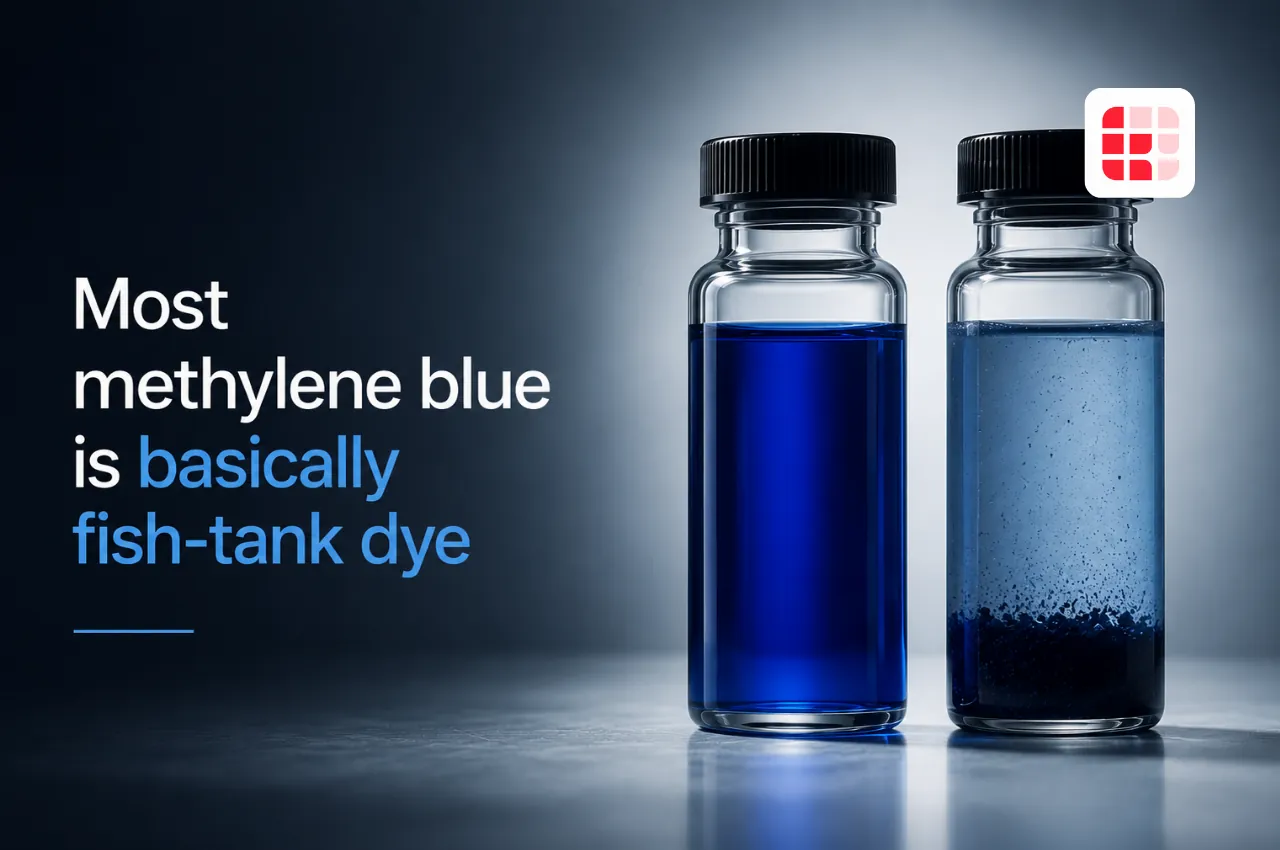
Generic supplements compared with a pharmaceutical-grade product
One name, several products
Methylene blue is sold as a laboratory stain for microscopy, as an aquarium treatment for fish disease, and as a pharmaceutical compound for human medicine. Chemically they are all methylene blue. Practically, they are manufactured to completely different standards.
Laboratory and aquarium grades are manufactured to color slides and treat tanks. Their specifications do not restrict contaminants that matter enormously in a human body, and independent analyses of industrial-grade material have found residues of arsenic, lead, cadmium, and mercury.
What USP grade actually means
The United States Pharmacopeia sets purity monographs for compounds used in medicine. USP grade methylene blue must exceed 99 percent purity with strict ceilings on metal residues and organic impurities, verified batch by batch.
The distinction matters more here than for most supplements because doses are small. At a few milligrams per day, a contaminant fraction that sounds trivial on paper becomes a meaningful share of what you are actually swallowing, every single day, for months.
How to read a label like an analyst
Three things separate serious products from repackaged dye. First, an explicit grade statement: USP or pharmaceutical grade, in writing. Second, third party testing, meaning an independent laboratory verified the batch, with reports available rather than promised. Third, a stated dose per serving that a human being would sensibly take.
Red flags run the other direction: no grade statement, no testing, dropper bottles of DIY dilution, and any product that winks at its aquarium heritage while selling to humans.
Why this became the whole conversation
As methylene blue's profile has risen, the internet has filled with cheap material rebottled for the wellness market. The compound's genuine research pedigree gets borrowed by products that share nothing with the material used in that research.
The fix is unglamorous: read the grade, demand the testing, and treat any seller who provides neither as exactly what they probably are.
Related reading
This article is for educational purposes and is not medical advice. Statements have not been evaluated by the Food and Drug Administration. Consult a healthcare professional before starting any supplement, especially alongside prescription medication.