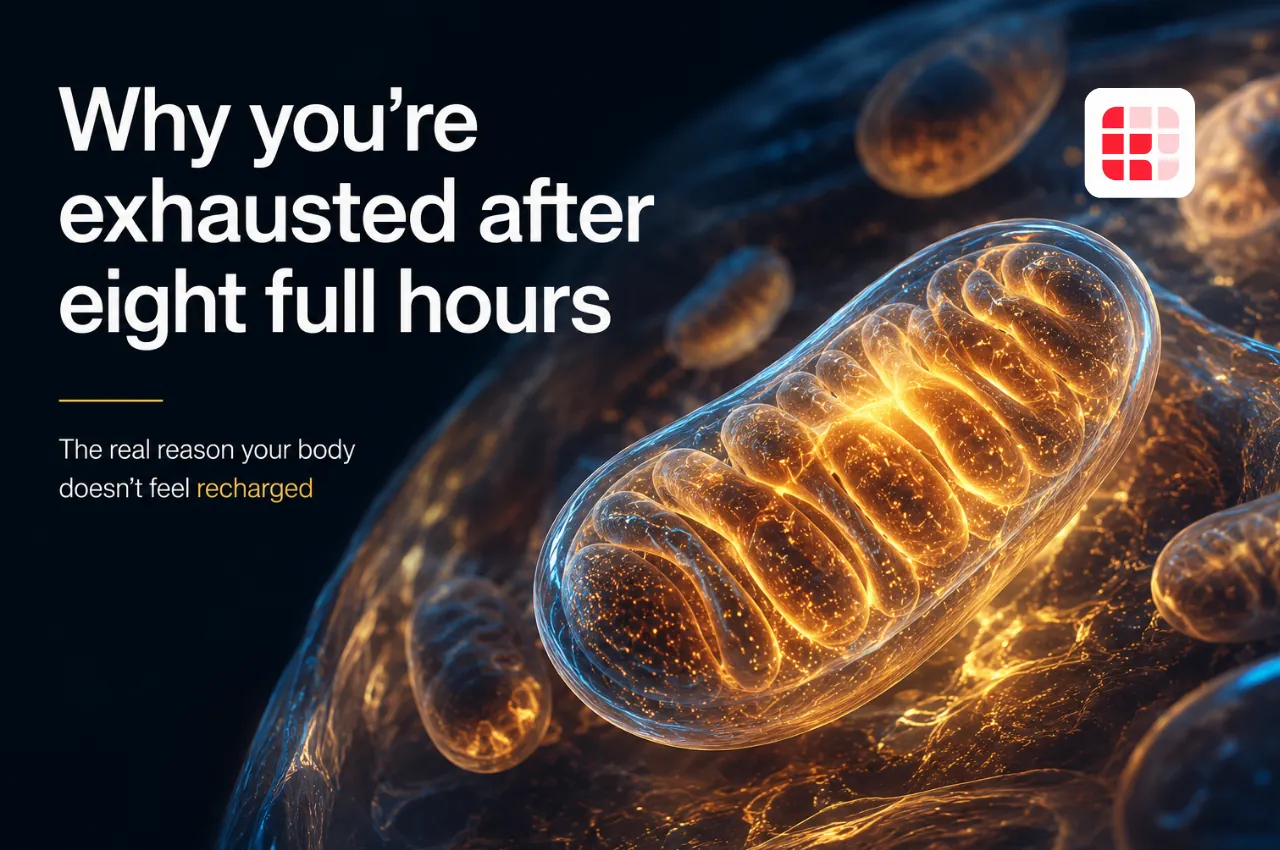
Illustration of cellular energy production in a neuron
Your body runs on ATP
Every heartbeat, thought, and muscle contraction is paid for in a molecule called adenosine triphosphate, ATP. You produce roughly your own body weight in ATP every day, and you cannot stockpile it. It is manufactured continuously by mitochondria, the organelles that populate nearly every cell.
When people describe feeling tired despite adequate sleep, drained by mid afternoon, or foggy for no obvious reason, the conversation increasingly turns to how well this manufacturing process is running.
The efficiency problem
Mitochondrial output is not fixed. Age, chronic stress, poor sleep, sedentary living, and ordinary oxidative wear all nudge the machinery toward inefficiency. The decline is gradual enough that most people experience it as personality rather than physiology: I am just not a morning person anymore. I just cannot focus like I used to.
Energy-hungry tissues feel it first. The brain, the heart, and the long peripheral nerves have the highest energy demands in the body, which maps uncomfortably well onto the most common complaints: mental fatigue, afternoon crashes, and that wired-but-tired feeling.
Why stimulants do not fix it
Caffeine and other stimulants do not add energy to this system. They block the perception of tiredness while spending the same limited ATP budget, which is why the crash arrives when they wear off. It is the biochemical equivalent of silencing a low-battery warning.
Actually supporting the system means supporting production: regular movement, real sleep, adequate protein, and, in the emerging research conversation, compounds that assist the electron transport chain itself. That is the frame in which molecules like methylene blue, CoQ10, and creatine keep appearing in the literature.
The compounding effect
Cellular energy improvements do not feel like a stimulant hit. People who work on this layer describe something quieter: mornings that require less negotiation, afternoons that do not collapse, recovery that comes faster after exertion.
The changes tend to build over weeks rather than minutes, which is exactly what you would expect from supporting a production system rather than borrowing against it.
Related reading
This article is for educational purposes and is not medical advice. Statements have not been evaluated by the Food and Drug Administration. Consult a healthcare professional before starting any supplement, especially alongside prescription medication.