Signal clarity comparison illustration
How caffeine actually works
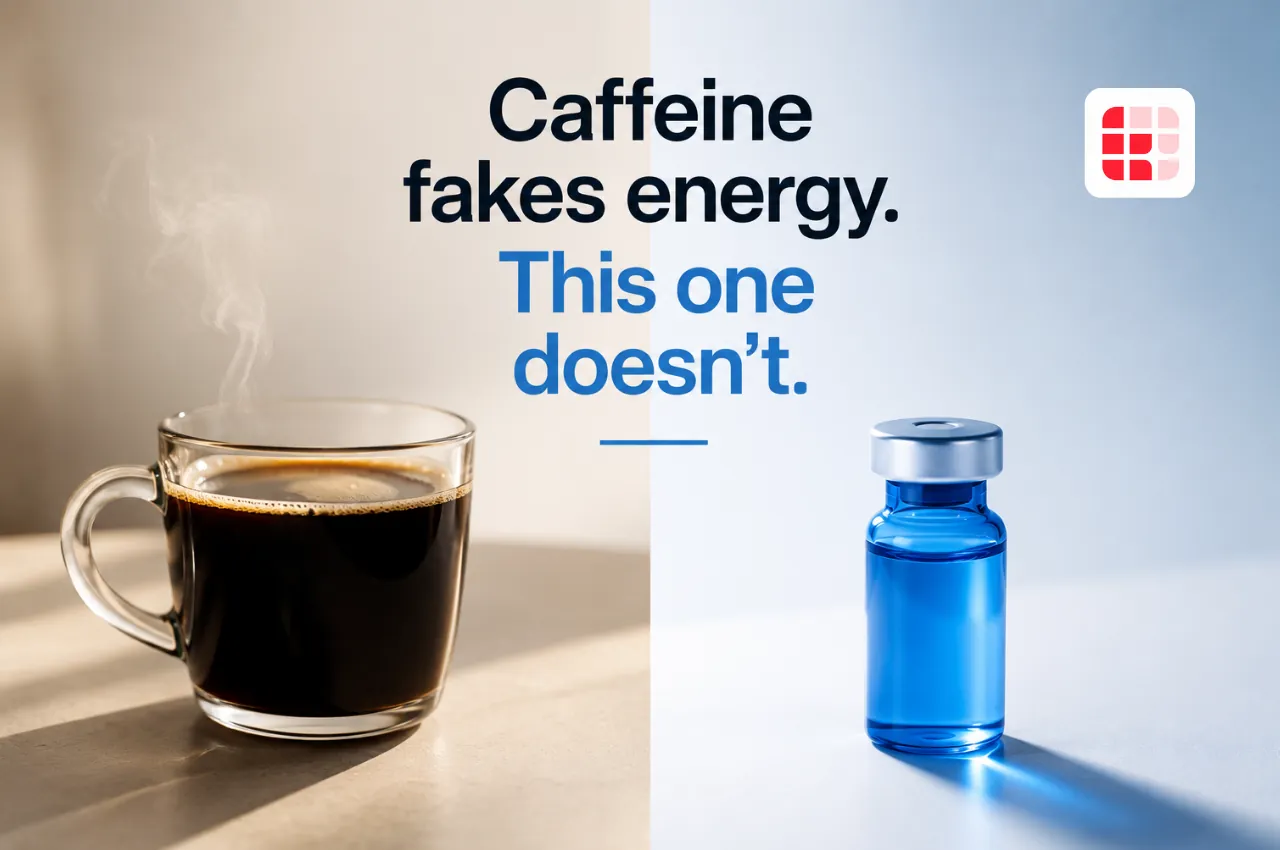
Caffeine does not create energy. It blocks adenosine, the molecule that accumulates through the day and signals tiredness to your brain. The tiredness is still there, and still accumulating; you have simply muted the notification.
This is why caffeine's signature arc exists: the lift, the tolerance that demands escalating doses, and the crash when the blockade wears off and the accumulated adenosine lands all at once. Add its six-hour half-life and late-afternoon coffee quietly taxes the night's sleep, which manufactures tomorrow's tiredness.
How methylene blue differs
Methylene blue operates on the production side. As a redox molecule, it can carry electrons within the mitochondrial assembly line that manufactures ATP, supporting the efficiency of the process that makes energy rather than masking the signal that you are low on it.
The experiential reports differ accordingly: not a jolt but an absence of the usual dips. No known tolerance treadmill at low doses, no receptor blockade to rebound from, and nothing psychoactive in the stimulant sense.
They are not enemies
Because the two compounds work on unrelated mechanisms, many people in the research and biohacking communities use both: caffeine for the sharp morning edge, cellular support for the baseline underneath it.
The pattern many describe is keeping the morning coffee and discovering the afternoon one has become optional. When baseline energy holds through the day, the second and third cups turn out to have been patches, not pleasures.
The honest comparison
Caffeine is fast, cheap, and reliable, and its downsides are equally reliable: tolerance, crashes, and sleep debt. Mitochondrial support compounds are slower, subtler, and build over weeks, with effects people describe as steadiness rather than stimulation.
Anyone on SSRIs or MAOIs, or with G6PD deficiency, should not use methylene blue without medical guidance. Caffeine asks fewer questions; it just sends the bill later in the day.
Related reading
This article is for educational purposes and is not medical advice. Statements have not been evaluated by the Food and Drug Administration. Consult a healthcare professional before starting any supplement, especially alongside prescription medication.