Red light therapy and cellular energy
Two roads to the same organelle
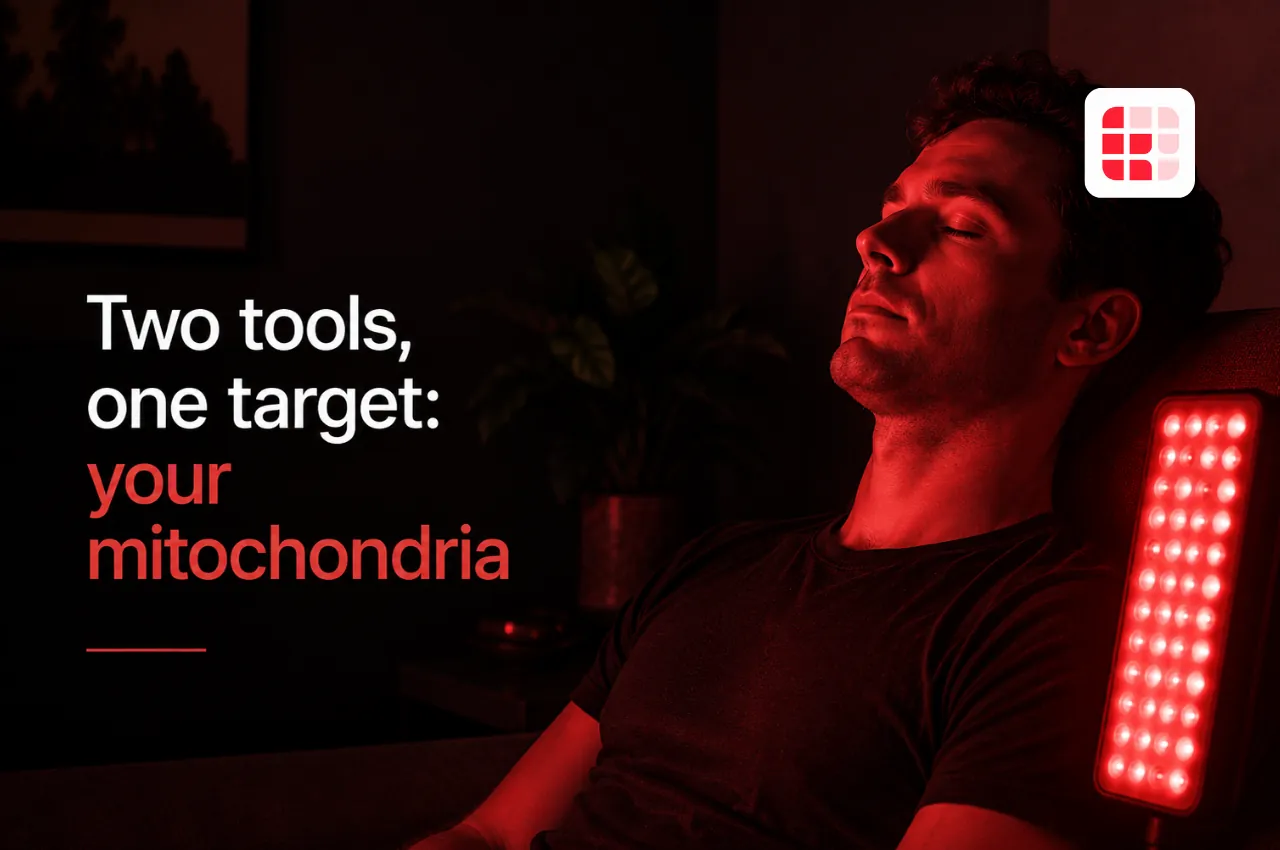
Red and near-infrared light therapy is studied for its effect on a mitochondrial enzyme called cytochrome c oxidase, part of the same electron transport chain that methylene blue supports. Both tools, in other words, aim at mitochondrial efficiency through different mechanisms.
That shared target is the logic behind pairing them: two non-overlapping routes to supporting cellular energy production.
What the research does and does not say
The mitochondrial mechanisms for both are reasonably well characterized. What is less settled is exactly how much the combination adds beyond either alone in humans, which is an active and early area of interest rather than a closed case.
Interestingly, methylene blue also absorbs light in a way that has made it a subject of photodynamic research, which is part of why the pairing intrigues people. That is mechanism, not proof of a super-stack.
A sensible protocol
If you want to experiment, keep it simple: a consistent daily methylene blue dose of verified pharmaceutical grade material, and red light exposure per your device's guidance. Change one variable at a time so you can tell what is doing what.
And the usual spine applies: no serotonergic medication without a doctor, no G6PD deficiency, and low, consistent dosing over heroic amounts.
Related reading
This article is for educational purposes and is not medical advice. Statements have not been evaluated by the Food and Drug Administration. Consult a healthcare professional before starting any supplement, especially alongside prescription medication.