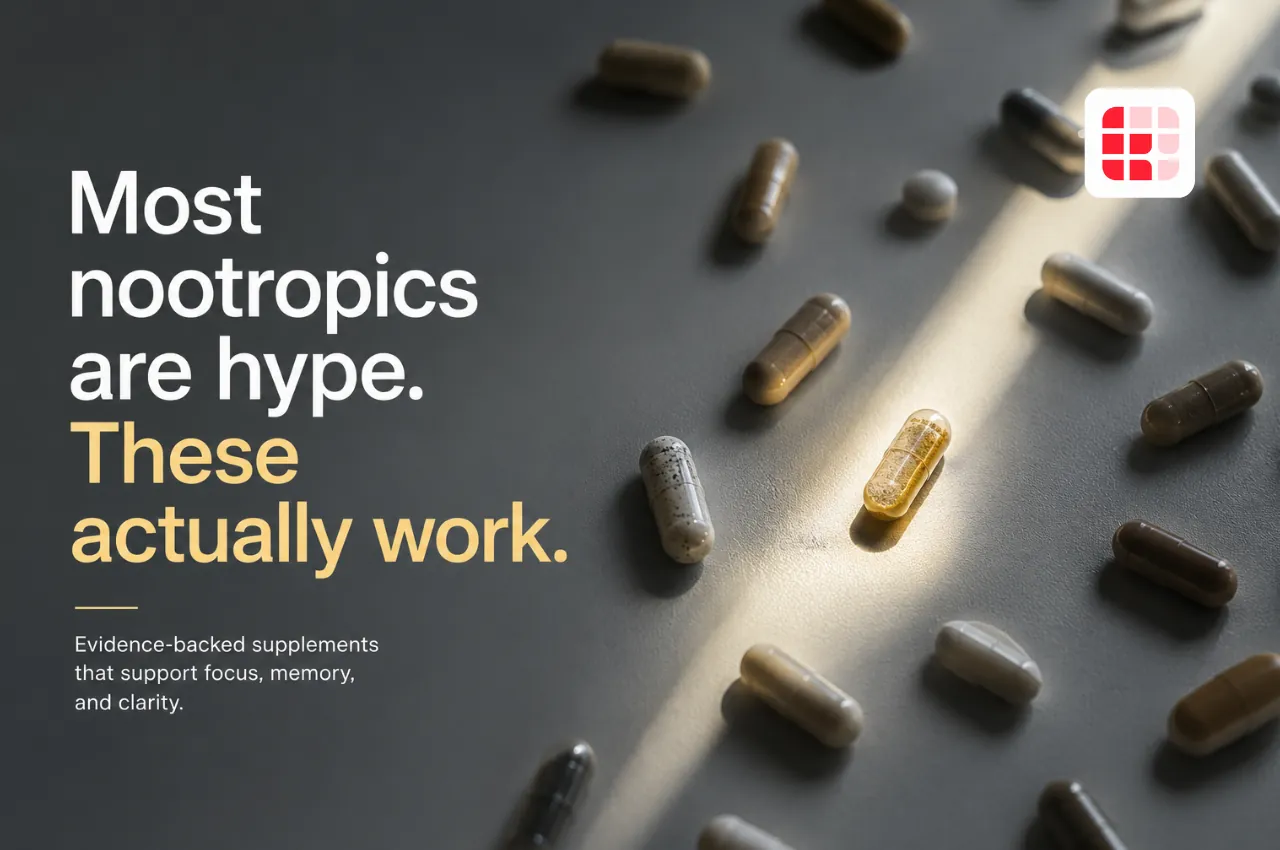
A tidy arrangement of supplement capsules
The evidence tiers
Nootropics fall into rough tiers. At the top sit compounds with decades of human research and clear mechanisms: caffeine, L-theanine, creatine, and omega-3s. In the middle sit compounds with promising mechanisms and growing but incomplete human data. At the bottom sit proprietary blends that hide their doses behind a trademark.
The single most useful filter is dosage transparency. If a label will not tell you how much of each active ingredient you are getting, assume the amount is too small to matter.
Mechanism beats marketing
A compound worth taking should have a plausible story for how it works. Caffeine blocks adenosine. Creatine buffers cellular energy. Methylene blue supports the mitochondrial electron transport chain. Each of these is a specific, testable claim.
Contrast that with the vague language of the hype tier: boosts brain power, unlocks your potential, supercharges focus. Verbs without mechanisms are marketing, not science.
The unsexy foundation
No nootropic outperforms sleep, and none rescues a broken diet. The compounds that help do so at the margins, on top of a foundation that is already solid. Treat them as amplifiers, not substitutes.
And check interactions. Even well-evidenced compounds have exclusions; methylene blue, for instance, must never be combined with SSRIs or MAOIs without medical supervision.
Related reading
This article is for educational purposes and is not medical advice. Statements have not been evaluated by the Food and Drug Administration. Consult a healthcare professional before starting any supplement, especially alongside prescription medication.